Music Featured in my Blog

Showing posts with label Living. Show all posts

Saturday, August 1, 2009

10 Words

In business emails, make your point in 10 words.

If you don't your reader's attention will get interrupted by the BlackBerry, arrivals of new emails, a ringing phone (your desk phone or a neighbor's abandoned cell phone's funky music), drop in visitors or hallway chatter.

There is a habit of inattention that all of these distractions create and reinforce.

If you've read to this point, you have read more words and longer sentences than my average business emails.

Yet my attempt at brevity rarely focuses the reader's attention. It seems that people are so driven by the urgent that they seldom have time for what's in front of them.

They miss meaningful information and insights. They have no lingering presence in the present. They are full of kinetic energy, like a tornado, that brings no rewards.

I've heard it said that every moment should be treated with the slow and full attention that you give to bathing your baby. Nothing in the world is more precious than this moment.

Saturday, July 25, 2009

Georgia Guidestones

This post concerns the intolerance that some (often religion leaders) have for Reason. Also, I have found that unfortunately it's often the crudest people who have the loudest voice.

The Georgia Guidestones are granite monument in Elbert County, Georgia, USA. A message comprising ten guides is inscribed on the structure in eight modern languages, and a shorter message is inscribed at the top of the structure in four ancient languages' scripts: Babylonian, Classical Greek, Sanskrit, and Egyptian hieroglyphs.

In June 1979, an unknown person(s) under the pseudonym R. C. Christian hired Elberton Granite Finishing Company to build the structure.

A message consisting of a set of ten guidelines or principles :

# Maintain humanity under 500,000,000 in perpetual balance with nature.
# Guide reproduction wisely - improving fitness and diversity.
# Unite humanity with a living new language.
# Rule passion - faith - tradition - and all things with tempered reason.
# Protect people and nations with fair laws and just courts.
# Let all nations rule internally resolving external disputes in a world court.
# Avoid petty laws and useless officials.
# Balance personal rights with social duties.
# Prize truth - beauty - love - seeking harmony with the infinite.
# Be not a cancer on the earth - Leave room for nature - Leave room for nature.

The Guidestones have become a subject of interest for conspiracy theorists. At the unveiling of the monument, a local minister proclaimed that he believed the monument was "for sun worshipers, for cult worship and for devil worship".

In 2008, the stones were defaced with polyurethane paint and graffiti with slogans such as "Death to the new world order."

Sunday, July 19, 2009

What Americans Like, but . . .

Americans like science. Overwhelming majorities say that science has had a positive effect on society and that science has made life easier for most people. Most also say that government investments in science, as well as engineering and technology, pay off in the long run.

While the public holds scientists in high regard, many scientists offer unfavorable, if not critical, assessments of the public’s knowledge and expectations. Fully 85% see the public’s lack of scientific knowledge as a major problem for science.

A substantial percentage of scientists also say that the news media have done a poor job educating the public. The scientists are particularly critical of television news coverage of science.

While scientists express frustration with the public, there are some significant points of agreement between the public and the scientific community. Majorities of both groups point to advances in medicine and life sciences as important achievements of science.

However, when it comes to contemporary scientific issues, there are often differences. For example, while 84% of scientists say the earth is getting warmer because of human activity such as burning fossil fuels, just 49% of the public agrees.

So what's to be done? Truthfully, not much because people would rather be entertained than informed.

There are gold mines of knowledge in Wikipedia, TED, Nova, Earth & Sky, National Geographic -- just to name a few.

But when it comes to having the TV remote in their hands, it's time for sports, mindless contest shows or cultist opinion programs.

(Extracted from this article, except for the closing opinions which are mine.)

His Motives

I go to the train station in my evening commute home.

Once or twice a week, there is a man there yelling from the Bible. There is a strident cadence in his voice as he reads from a much highlighted text. There are yellow, pink, blue and green markings covering each page of his large study Bible.

There is neither love nor hate in his voice. Just a seeming forceful exorcism.

I have wondered whether he is trying to remove the demons from the world or from himself. He is not wanting to lead anyone to "salvation"; nor does he preach God's higher glory.

It seems to be a wail against some past "sin" of his, and he is asking God for forgiveness. I hope he receives it.

Saturday, July 11, 2009

Belief and Knowledge

People are not naturally skeptics, wondering if a single one of their beliefs can be reasonably preserved. They are dogmatists, angrily confident of maintaining them all.

We should be skeptics with regards to our beliefs, unless we have been privately convinced they are true and worth having.

The idea is not to have the courage of our convictions; it's to have the courage to challenge our convictions.

I've often said that believing in something, anything, is easy. It requires nothing but belief. If I were to believe that it will rain tomorrow, but all weather patterns and pressure systems say that it won't, then all I have is my belief. Only when tomorrow comes, and brings no rain, will I rationalize the event and justify my belief.

Though I may be proved wrong, my belief was correct.

Of course, that's not the way to a rational and objectively lived life. Yet people cling rather than prove; deny rather than become open; believe only rather than do the mental legwork to know.

What do you believe only? Do you have the courage to challenge it, or are you angrily confident?

Sunday, July 5, 2009

The Four Marks of an Educated Person

See how you fit in the educated person category:

1. He speaks and writes clearly and precisely. No matter how much information he has stored away, he's not educated until he's able to use his mother tongue with grace, precision and clarity.
2. She has a set of values and the courage to defend them. Knowledge and experience have given her the capacity to discriminate not only between right and wrong but between the trivial and the significant; between that which is cheap and that which has integrity.
3. He tries to understand his society and how it differs from others. He views these differences with compassion and respect. Whereas the uneducated man sees them as evidence of his own superiority, regarding the customs of others with condescension or contempt.
4. She looks squarely at the world and its problems, always with hope. She neither rejects nor fears the complexity and dangers of modern live, but accepts as her responsibility the task of making order out of complexity, opportunity out of danger.

Did you qualify on all four accounts?

1,000 Words

Of the 1,000 most frequently used English words (click here), regardless of education most people use only 403 words in nearly 80% of their daily conversations.

So whether you're a PhD, an office worker or a waitress, your basic spoken vocabulary is about the same.

To me this means you could speak any language with comparative ease by learning only about 400 words.

The words most used are: the, of, and, a, to, in, is, be, that, was, he.

These provide one-sixth of a person's vocabulary.

And the first 30 to 40 words on the list constitute over half a person's everyday speech.

Here again you can see how easy it would be to get along in a foreign language, if we know which words to learn and how to hang them together.

Saturday, June 13, 2009

The Running Mockingbird

Recently I was working in my yard, when I noticed an adult mockingbird that kept running from me. It couldn't fly, so it ran.

Something in its physiology was not right, so it dealt with my presence in the only way that it could.

This is true of humans, also. The human psyche is made up of certain dimensions which define all humans: the ability to reason, to delay gratification in pursuit of a higher goal, to show compassion, to display loving-kindness, to develop self-esteem and encourage it in others, to be objective.

When any of these qualities are distorted or missing, our lives are not the fullest. We cannot fly (or perhaps not even run). So we deal with the situations in life as best we can -- sometimes skillfully, oftentimes not.

I think that in most cases where these shortcomings exist, we can only compensate for their absense. We cannot be made whole, but we can learn to cope. We learn to run, like the mockingbird.

So how can we learn to cope with our shortcomings and encourage others to compensate for theirs?

Saturday, May 16, 2009

The Fruit of our Character

Nature magically suits the man to his fortune by making these the fruit of his character. -- Ralph W. Emerson

We might experience some difficulty in finding out what we're really like by trying to look inward. But we have only to look about us - at our fortunes - for they are the fruit of our character. You would judge someone the same way you would judge an apple tree: by his fruit, by what he produces.

Any person who has had the chance to live as an adult for any appreciable length of time begins to collect about him what we call his fortunes. They represent a merciless mirror of him as a person. They reflect his nature.

We surround ourselves in an environment and circumstances which reflect us, and which include our true beliefs. No matter how loudly we talk about what we believe in, our circumstances reflect our true beliefs. They show to others what is important to us; they reflect our degree of maturity at any stage of our lives.

As we get older, our environment and circumstances should change to reflect the changing person. If they do not change, it is an indication that we are not changing. If they are not growing in quality, it is an indication that we are not growing and maturing as persons.

A person will grow in proportion to two main conditions: The first is his degree of receptivity to new ideas. The second is the source or sources of ideas; if our sources fortify the ideas that we already live by then there is no growth.

So who are your teachers and how open are you to the learning you must undertake in order to grow? How is that learning bearing the fruit of your life?

Sunday, April 19, 2009

Hiding Your Light

In Matthew 5:15, Jesus entreats us to not hide our light, but to put it on its stand, and give light to everyone in the house.

A recent I Ching casting had a different recommendation.

Hexagram 36 says that there are times when we should hide our light in order to protect ourselves.

I have found that this hiding must occur with co-workers, friends and family. It must occur, in other words, with the people who are closest to you.

When you speak out to an entrenched people, you will run into criticism and ostracism.

I have found that many do not want dialog; they want to hold to their beliefs, prove you wrong, and resent or demean you for believing differently.

They do not want your light.

So place your light under that bushel; let it glow and shine within; develop the truth within yourself.

Spend your time educating and enlightening yourself, rather than wasting it arguing and disagreeing.

Friday, April 3, 2009

The Unseen Flower

He was a large black man sitting on the train. He was dressed in work clothes that looked like he was ready to change tires on cars all day long.

At first, I glanced at him like I do most fellow passengers. Nothing special; just commuters like me.

But he was a pendulum in motion. He had an artist's sketchbook in his workman's hand. Next to him, was a satchel bulging at every thread of every seam.

He would reach into the satchel, pull out a bundle of felt tipped markers wrapped in a rubber band. From this bundle, by intuition only, he would extract a marker, take the cap off and place it on the marker's opposite end. Then he would touch the sketchbook page a time or two, swap the cap to the other end, place the marker back into the bundle, and stuff the bundle back into the satchel.

And again without hesitation, out would come another bundle of markers, and the process repeated again and again.

What could he be working on? Certainly only scribbles, I thought.

Then I saw. Amazing art. Art of an idealized young white woman, whose long blond hair provided a border for her perfectly youthful body. Art that a gifted fourteen year old girl would render. Art that was art; not gaudy; not sexual; not lustful. Art of innocence.

As the train pulled into his station, he closed the sketchbook, zipped the satchel and left.

Why did he draw and paint with those markers? Who will see his work?

Perhaps he is like a flower that grows unseen in the forest.

But I saw.

Sunday, November 16, 2008

Five Qualities of a Good Life

Aristotle guided early scientific thinking for most of the Western world. But he also offered what I think is a good pattern for a high quality life. Here is my summary:

Health - You are mortal, so take good care of your body.

Wealth - Money is a source of freedom; so earn enough for all of your needs, and be generous with the remainder.

Love - Experience it, give it; that is why you're here.

Knowledge - Understand the wonder of mankind, the world and beyond.

A Strong Moral Character - Be a light to guide others following you.

Saturday, September 27, 2008

It's Easier to Believe

One of my favorite sayings is, "It's easier to believe than to know."

What I mean is that anyone can believe anything about everything. Belief requires nothing but belief.

On the other hand, to know something requires effort. The effort to challenge your belief. The effort to seek and assimilate knowledge outside of yourself. The effort to educate yourself in an area in which you are ignorant (meaning that you do not know).

The effort is all the difference.

Are you willing to make it?

It's nice to have the courage of your convictions; but it's harder and more rewarding to have the courage to challenge your convictions.

Make the effort to know. You'll find rewards you never expected. 

Visit www.factcheck.org and www.wikipedia.org because knowledge is at your fingertips.

Saturday, September 13, 2008

Proud Liberal

What would America be like without the liberal advances of the past sixty or seventy years? 

Without the extraordinary contribution of liberals — from the mightiest presidents to the most unheralded protesters and organizers — the United States would be a much, much worse place than it is today.

Civil rights? Women’s rights? Liberals went to the mat for them time and again against ugly, vicious and sometimes murderous opposition. They should be forever proud.

The liberals gave us Social Security and unemployment insurance, both of which were contained in the original Social Security Act. Most conservatives despised the very idea of this assistance to struggling Americans. Republicans hated Social Security, but most were afraid to give full throat to their opposition in public at the height of the Depression.

Liberals gave us Medicare and Medicaid. Quick, how many of you (or your loved ones) are benefiting mightily from these programs, even as we speak. It's telling that Republicans are proud of Ronald Reagan, who saw Medicare as "the advance wave of socialism," while they actively and forcefully demand the benefits of it.

Delusional and hypocritical.

Without the many great and noble deeds of liberals over the past six or seven decades, America would hardly be recognizable to today’s young people. Liberals (including liberal Republicans, who have since been mostly drummed out of the party) ended legalized racial segregation and gender discrimination.

Liberals gave this country Head Start and legal services and the food stamp program. They fought for cleaner air and cleaner water.

Liberals. Your food is safer because of them, and so are your children’s clothing and toys. Your workplace is safer. Your ability (or that of your children or grandchildren) to go to college is manifestly easier.

It would take volumes to adequately cover the enhancements to the quality of American lives and the greatness of American society that have been wrought by people whose politics were unabashedly liberal. 

It is a track record that deserves to be celebrated.

Saturday, September 6, 2008

Better Aspirations

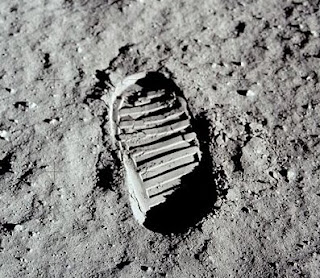
What have we done lately? Have we had a successful national initiative since 1969 and the moon landing?

If you look back at the recent years, our nation has achieved nothing in which we can take pride in as a nation; some wondrous act that people generations from now will study as examples for an enlightened, productive and just society.

I'm talking about the achievements such as: John Kennedy's challenge to land a man on the moon; Lyndon Johnson's Great Society, and the Civil Rights Act; Dwight Eisenhower's national highway program; Franklin Roosevelt's New Deal, the victory in WWII, the G.I. Bill, and his vision for the United Nations; Theodore Roosevelt's Square Deal, and the regulation of corrupt and monopolistic industries; Abraham Lincoln's ending of slavery, and his superhuman effort to hold our nation together; and finally, the First Transcontinental Railroad, the Monroe Doctrine and the Louisiana Purchase.

Since July 20, 1969, when an American set foot on the moon, what have we done with commitment and pride?

Since that time, a materialistic corruption has ruled American policies. How else can we explain the incompetence, the scandals, the corruption, the waste, the giveaways to those with much, the convicted lobbyists and the no-bid contracts? My explanation is that some in government want government to fail, so that Americans no longer believe that great things are possible. A disengaged citizenry is easier to manipulate.

I have a different view from this. Here are our next great achievements: lift working families out of poverty with supports for transportation, health care, nutrition, child care, education, housing, and other basic needs; resolve conflicts, reduce violence, and defeat terrorism without preemptive war; institute a consistent ethic of life (reduce abortion, end capital punishment, and stop genocide); strengthen human rights and promote human dignity; protect our planet from the interests and activities that damage it (reverse global climate change and develop clean, renewable energy); skillful measures to strengthen families must become a personal and national priority (without scapegoating gays, immigrants, or people diverse race, faiths or ethnicity).

Forty years of nothing is enough. Better aspirations and goals await us. We have been and can be a better nation than this.

So don't believe the lie that government is the problem. We the American people are the government, and it is time that once again we use it for our own greatness and for the benefit of all peoples of our shared planet.

Sunday, August 24, 2008

Theory of a Thousand Marbles

A friend sent the following story:

The older I get, the more I enjoy Saturday mornings. Perhaps it's the quiet solitude that comes with being the first to rise, or maybe it's the unbounded joy of not having a fixed commitment. Either way, the first few hours of a Saturday morning are most enjoyable.

Let me tell you something that has helped me keep my own priorities. I'll call it the "theory of a thousand marbles."

You see, I sat down one day and did a little arithmetic. The average person lives about seventy-five years. I know, some live more and some live less, but on average, folks live about seventy-five years.

Now then, I multiplied 75 times 52 and I came up with 3900, which is the number of Saturdays that the average person has in their entire lifetime.

It took me until I was fifty-five years old to think about all this in any detail, and by that time I had lived through over twenty-eight hundred Saturdays. I got to thinking that if I lived to be seventy-five, I only had about a thousand of them left to enjoy. So I went to a toy store and bought every single marble they had. I ended up having to visit three toy stores to round up 1000 marbles. I took them home and put them inside a large, clear plastic container.

Every Saturday since then, I have taken one marble out and thrown it away. I found that by watching the marbles diminish, I focused more on the really important things in life.

There is nothing like watching your time here on this earth run out to help get your priorities straight.

This morning, I took the very last marble out of the container. I figure that if I make it until next Saturday then I have been given a little extra time. Let's use it well.